
North Bank · village
Juffureh
Also recorded as Jufureh
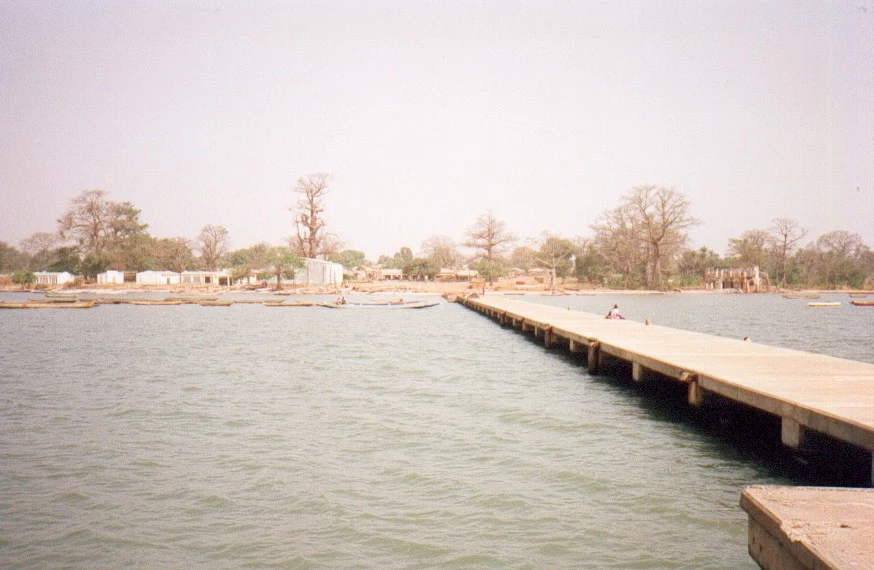
A riverside village containing the Maurel Frères building, one element of the UNESCO-inscribed Kunta Kinteh ensemble.
Gathering what this circle has shared so far.
Chapter 01
15th-20th centuries
Albreda's chapel and commercial building
UNESCO identifies the remains of a Portuguese chapel and a CFAO warehouse building in Albreda among the related sites. The village therefore holds material traces of different periods of exchange at the riverbank.
The restored CFAO structure and fragile chapel ruins require different conservation responses. Their place in a shared designation should not erase the ordinary histories of the surrounding village.
A familiar name, a remembered voice. What would you add to the story of Juffureh?
Add your memoryChapter 02
1779-2000s
A vulnerable river ensemble: UNESCO's own conservation record
UNESCO's dossier describes Kunta Kinteh Island's fort as having remained a ruin since 1779, with only limited efforts to consolidate it or slow sea erosion, and it calls the surviving fabric extremely vulnerable to that erosion. Fort Bullen, across the river mouth, faces a comparable problem: the dossier records its seaward wall suffering erosion, with sections that had collapsed and twenty metres rebuilt in 2000.
Conservation has not been uniform across the ensemble. The dossier records the CFAO building in Albreda as restored with sea defence works, the Maurel Freres building in Juffureh as restored in 1996 and in good condition, and the Six-Gun Battery on the Banjul side as also well conserved, while the Portuguese Chapel and the San Domingo ruins needed reinforcement of endangered sections around 2000. Quarterly physical inspections by the National Centre for Arts and Culture, funded mainly from entrance fees, are the dossier's own description of ongoing monitoring across the group.
Chapter 03
Present stewardship
A vulnerable river heritage landscape
UNESCO describes the island and several related places as fragile ruins exposed to erosion. The visible fabric has survived in uneven condition, and both restoration and careful maintenance shape what a visitor can see.
The National Centre for Arts and Culture is named as custodian of the monuments. The dossier also describes site attendants, local stakeholders and inspection as parts of management, connecting public heritage to local responsibilities.
Chapter 04
1730-1824
Juffureh, Gillyfree and the river neighbours
Moore located the Royal African Company's Gillyfree station across from James Island and near the French post at Albreda. His map of posts shows a river landscape where African rulers and traders shaped what outsiders could do. The proposed link from his spelling to Juffureh needs a directly read place-name authority before display.
Bowdich's 1820s chapter calls the place Jillafree and notes that the river water turned fresh there during the rains. She describes a trading factory and Albreda about a mile away. These book observations concern the river corridor, not a claim that Juffureh can be understood only through foreign trading posts.
Chapter 05
Colonial era
Juffureh's Maurel Frères building
The Maurel Frères building in Juffureh is one of the named structures of the World Heritage ensemble. UNESCO records its restoration in 1996 and distinguishes it from the ruined sites nearby.
Juffureh is often discussed through a diaspora pilgrimage lens. The designation supports discussion of the place's history and memory, not a universal claim that any visitor can establish a documented family chain to this village.
Chapter 06
15th-20th centuries
Kunta Kinteh Island: trade, captivity and memory
Its position in the River Gambia made the island strategically valuable to groups seeking to control travel and commerce. UNESCO's inscription treats its fort and related riverbank structures as evidence of several phases of African-European encounter, including the Atlantic slave trade.
For diaspora visitors the ruins carry profound symbolic meaning. That meaning does not make every personal ancestry claim traceable to a specific building; the physical evidence, memorial practice and family histories must be presented as distinct kinds of knowledge.
Chapter 07
Early European river trade
San Domingo's scarce remains
The remains of San Domingo are part of the Kunta Kinteh inscription's sequence of riverbank places. UNESCO identifies the site as a former small Portuguese settlement.
Very little is visible above ground, and UNESCO points to archaeological potential. That is a reason to describe the site's limits honestly, not to fill gaps with a reconstructed street plan or speculative household stories.
Terranga. There is room for you here.
What does Juffureh
mean to you?
A name you remember. A photograph in a drawer. A voice you want the next generation to hear. You do not need a complete history to add something meaningful.
From nearby or far away, in the language that feels like home. New contributions are reviewed with care before they appear.
A place at the table
The Juffureh guest book
A greeting from afar. A familiar corner. Someone you remember.
Words from the circle
Community memories and greetings, not independently verified historical findings.
Opening the guest book...